

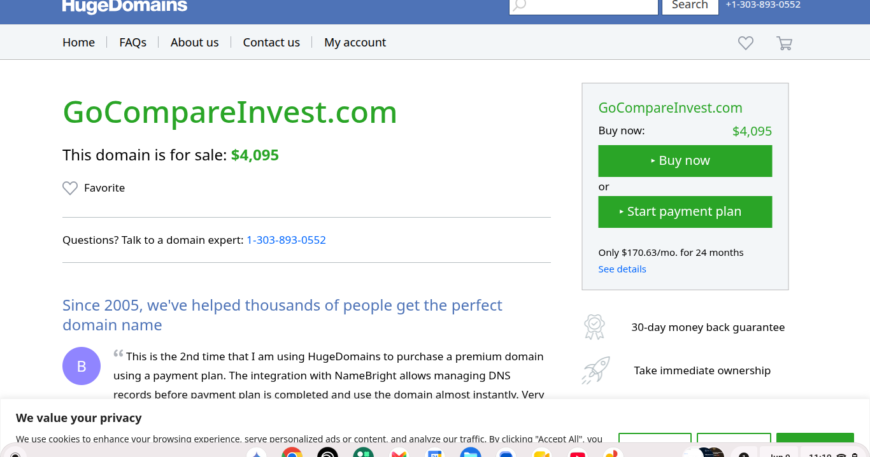
Introduction:HugeDomains.com is one of the most recognizable premium domain marketplaces on the internet. The platform specializes in buying, holding, and reselling domain names that are considered valuable due to branding potential, keyword relevance, or market demand. While many buyers successfully acquire domains through the platform, prospective customers should still perform careful due diligence before committing significant funds.
Premium domain investing can involve substantial costs, and buyers who rush into purchases without understanding pricing structures, ownership history, valuation methods, and transfer procedures may face unexpected challenges. This article examines key considerations and potential risks that buyers should evaluate before purchasing domains through HugeDomains.com or any premium domain marketplace.
Why Premium Domain Purchases Require Caution
A common misconception among first-time buyers is that all domain names should cost only a few dollars per year. While registration fees for new domains are generally low, premium domains often sell for hundreds, thousands, or even tens of thousands of dollars.
HugeDomains operates in the premium domain sector, where prices are determined by perceived market value rather than standard registration costs. As a result, buyers may encounter domain listings that appear expensive when compared to ordinary registrations.
Before making a purchase, investors should determine whether a domain’s asking price aligns with their business objectives and long-term branding strategy.
Understanding the Pricing Model
One of the biggest concerns for domain investors is valuation transparency.
Premium domain marketplaces frequently use proprietary methods to determine pricing. These valuations may consider factors such as:
- Keyword popularity
- Search demand
- Brandability
- Industry relevance
- Historical sales data
- Extension type
However, domain valuations are often subjective. A domain that appears valuable to one buyer may have limited value to another.
For this reason, buyers should avoid assuming that a listed price automatically reflects fair market value. Independent research and comparison with similar domain sales can provide additional perspective before making a purchasing decision.
Potential Risks for Domain Investors
1. Overpaying for a Domain
One of the most significant risks in premium domain investing is paying more than a domain can realistically return in future value.
Some buyers purchase domains based on emotional attachment or perceived opportunity without conducting proper market analysis. If future resale demand fails to materialize, recovering the original investment may become difficult.
2. Limited Liquidity
Unlike stocks or traditional financial assets, domain names are not always easy to resell.
A buyer may acquire a premium domain and later discover that finding another purchaser takes months or even years. Investors should understand that domain ownership does not guarantee future profits.
3. Uncertain Market Demand
Domain values can fluctuate based on:
- Industry trends
- Consumer behavior
- Search engine developments
- Emerging technologies
- Economic conditions
A domain considered highly desirable today may lose relevance in the future.
4. Opportunity Cost
Capital tied up in premium domains cannot be used elsewhere.
Businesses should evaluate whether allocating funds toward a domain purchase provides greater value than investing in marketing, product development, customer acquisition, or operational growth.
Due Diligence Steps Before Buying
Research Ownership History
Before purchasing any premium domain, investigate its background.
Important questions include:
- Has the domain changed ownership multiple times?
- Was it previously associated with questionable content?
- Does it have a positive online reputation?
- Are there any trademark concerns?
Historical research can reveal issues that may affect future branding efforts.
Evaluate Comparable Sales
Experienced investors often review comparable domain transactions before making a purchase.
Comparing similar domains may help buyers determine whether a listing price appears reasonable within the broader marketplace.
Assess Brand Value
A premium domain should contribute meaningful value to a business.
Ask yourself:
- Will customers easily remember the name?
- Does it enhance credibility?
- Does it align with future growth plans?
- Can it support long-term marketing objectives?
A strong domain can become a valuable business asset, but only if it fits the intended strategy.
Avoid Unrealistic Profit Expectations
One of the most common mistakes among new domain investors is expecting guaranteed profits.
No domain marketplace can guarantee:
- Future resale value
- Increased traffic
- Business success
- Investment returns
Marketing claims should always be evaluated carefully. Buyers should make decisions based on independent analysis rather than assumptions about future gains.
Warning Signs Buyers Should Watch For
Regardless of which marketplace is being used, investors should remain cautious when they encounter:
- Pressure to purchase quickly
- Unrealistic return expectations
- Limited independent research
- Inadequate due diligence
- Assumptions that every premium domain will appreciate
Successful domain investing typically requires patience, market knowledge, and realistic expectations.
Investor Protection Tips
Before spending significant money on premium domains:
- Establish a maximum budget.
- Verify ownership and transfer procedures.
- Research comparable sales.
- Review marketplace policies carefully.
- Consider consulting domain industry experts.
- Avoid emotionally driven purchases.
- Maintain realistic expectations regarding future value.
These steps can help reduce risk and improve decision-making.
Final Verdict
HugeDomains.com is a well-known participant in the premium domain marketplace, but buyers should still approach every domain acquisition with caution. Premium domain investments involve valuation uncertainty, market risk, liquidity challenges, and potential opportunity costs.
Rather than relying solely on listed prices or perceived scarcity, investors should conduct independent research, compare alternatives, and evaluate whether a domain genuinely supports their business objectives.
Careful due diligence remains the most effective way to protect capital and avoid costly mistakes when purchasing premium domain names through any marketplace.

